
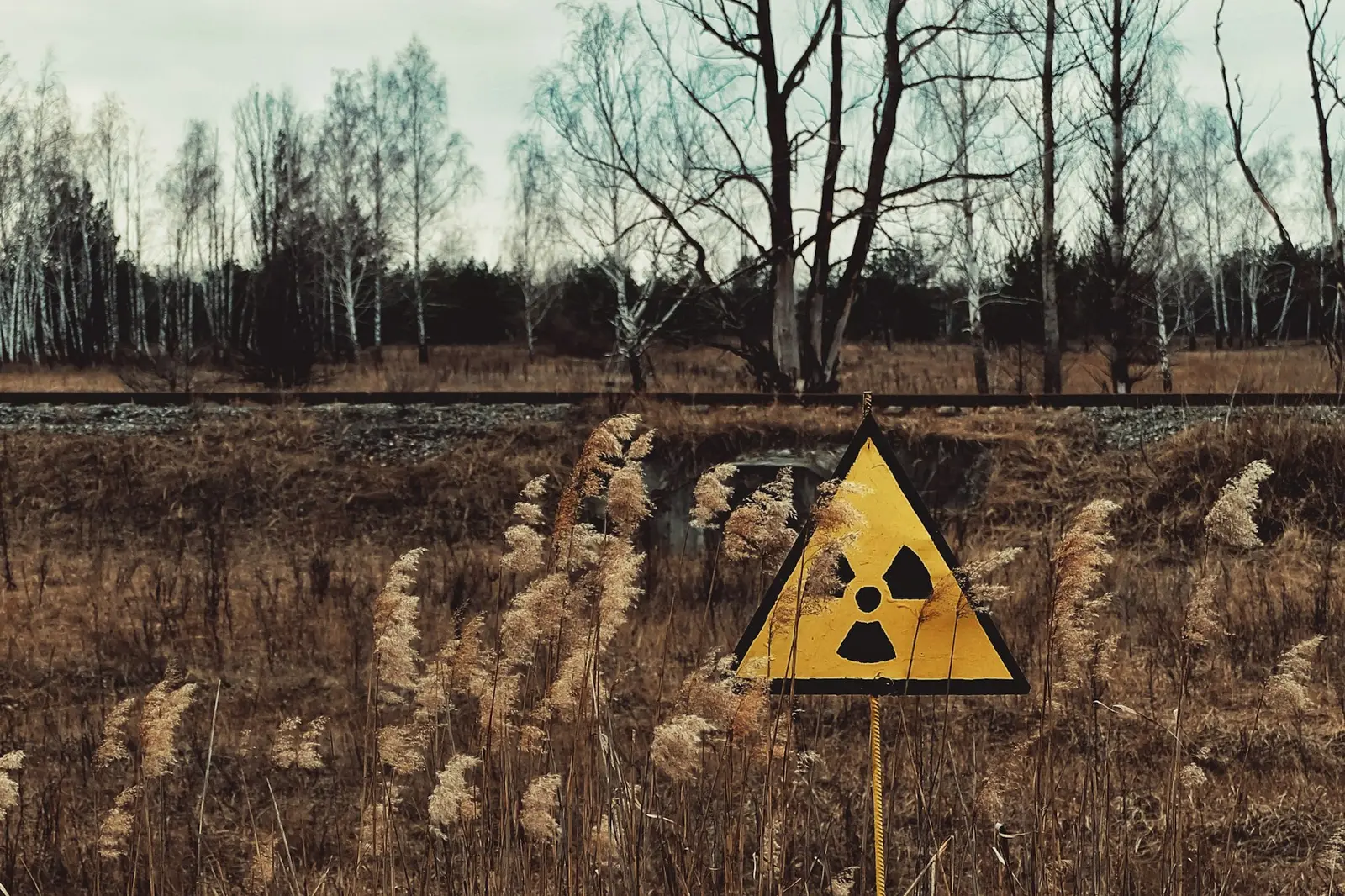
Radiation Safety
Gamma-Ray Spectrometry
An applied programme in gamma-ray spectrometry and its use in analysing water, soil, environmental and geological samples: detectors and counting systems, energy and efficiency calibration, preparation of samples and standard sources, nuclide identification, calculation of activity, uncertainty and detection limits, and quality control.
Overview
About the programme
Duration
5 days
Training hours
25 hours
Delivery
In the organisation’s laboratory
Language
Arabic or English
Objectives
Training outcomes
- Understand the interaction of gamma rays with matter and the differences between gas, scintillation and semiconductor detectors.
- Operate the spectrometry system and its software, and calibrate it for energy and efficiency.
- Prepare standard sources and water and soil samples in a fixed counting geometry.
- Identify nuclides by their characteristic energies and emission probabilities, and apply radioactive equilibrium to measuring the uranium and thorium series.
- Calculate activity, correction factors, uncertainty and detection limits, and build a spreadsheet for these calculations.
- Apply quality control and proficiency testing.
Content
What the programme covers
Day 1: foundations and detectors
- Radioactivity and its sources, and units of activity and dose.
- Interaction of gamma rays with matter: photoelectric absorption, Compton scattering and pair production.
- Detectors: gas-filled, scintillation such as sodium iodide, and semiconductor such as high-purity germanium, compared for efficiency and energy resolution.
- Counting techniques, and secular equilibrium and its applications.
Day 2: the spectrometry system
- System components: detector, amplifier, multichannel analyser and lead shield.
- The function of each component and how to operate it.
- Practical: operating the system and spectrometry software, and energy and resolution calibration.
Day 3: standard sources and efficiency
- Practical: preparing standard sources in the approved counting geometry.
- Statistical fluctuations and background, and their measurement.
- Practical: building an efficiency spreadsheet using an efficiency curve and comparison with a standard source.
- Preparing water and soil samples: drying, grinding, filling and sealing until equilibrium is reached.
Day 4: nuclide identification and corrections
- Identifying nuclides by characteristic energies and emission probabilities: potassium-40, caesium-137, and the progeny of radium-226 and thorium-232.
- Correction factors: self-absorption, coincidence summing and decay.
- Practical: completing the efficiency and activity spreadsheets.
Day 5: calculations and quality
- Practical: calculating the activity of an environmental sample.
- Calculating uncertainty and detection limits.
- Problems in gamma measurements and their solutions.
- Quality control, proficiency testing, ISO/IEC 17025 requirements, and laboratory health and safety, followed by the assessment.
Who it is for
Target audience
Chemists, physicists and technicians in water, environmental and geological laboratories, the managers of these laboratories, and others interested in applications of gamma-ray spectrometry.
Method
Delivery method
Theory and practice. The practical part is carried out in the organisation’s laboratory on its own spectrometry system; standard sources and samples are agreed with the organisation before delivery. Each participant builds efficiency and activity spreadsheets to use in their work. Delivered in Arabic or English.
Questions
FAQ
Is the programme suitable for laboratories that only have a sodium iodide detector?
Yes. The programme covers both sodium iodide and high-purity germanium detectors, and the practical part focuses on the system the organisation has, with the limits of each type for nuclide identification made clear.
Does the programme cover field measurement with portable spectrometers?
The programme centres on laboratory analysis. It presents the principles shared with field measurement but does not cover operating portable spectrometers in the field.
Is there a certificate?
Every participant who attends the programme and passes the assessment receives a certificate of completion from Technology Experts Training Center, licensed by the Technical and Vocational Training Corporation.
A programme tailored to your organisation
The duration and topics of the programme are adjusted to the organisation's needs, and it is delivered at its site, in a training hall arranged by the Center, or virtually.