
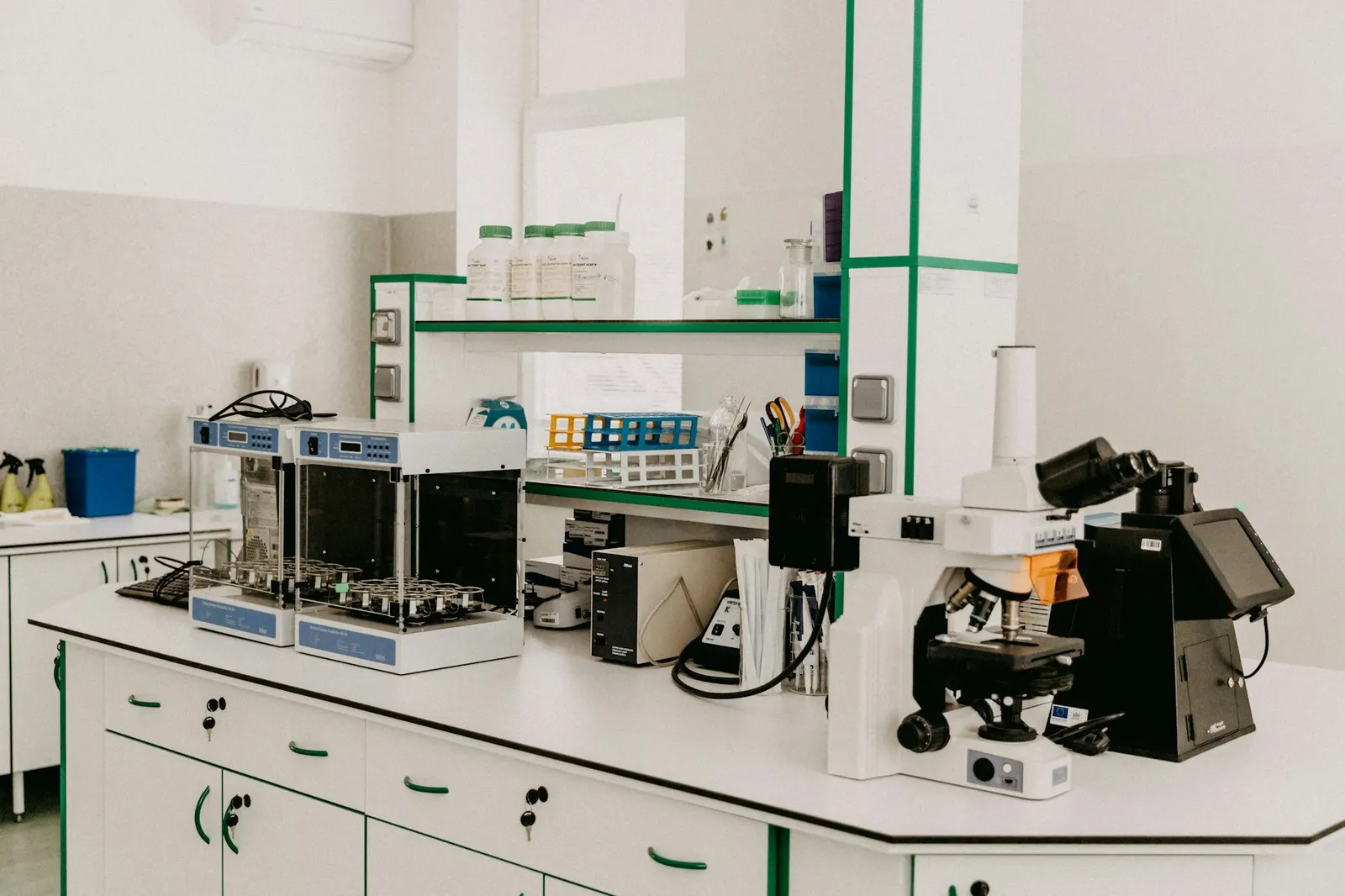
Laboratories
Food Safety Management System ISO 22000
A programme in the requirements of a food safety management system to ISO 22000:2018 and their application in food chain organisations: the main clauses of the standard, prerequisite programmes, hazard analysis and the hazard control plan including the HACCP and OPRP plans, and internal auditing of the system.
Overview
About the programme
Duration
4 days
Training hours
12 hours
Delivery
Training hall · Virtual · At your premises
Language
Arabic or English
Objectives
Training outcomes
- Understand the foundations and concepts of a food safety management system, and the structure of ISO 22000:2018 and the common structure it shares with other management system standards.
- Apply the requirements for the context of the organisation, leadership, planning and support, including risks and opportunities at system level.
- Distinguish prerequisite programmes (PRPs), operational prerequisite programmes (OPRPs) and critical control points (CCPs), and build the hazard control plan.
- Understand the requirements for traceability, emergency preparedness, and control and withdrawal of nonconforming product.
- Evaluate system performance through monitoring, internal audit following ISO 19011:2018 and management review, and improve the system.
Content
What the programme covers
Day 1: foundations, context and leadership
- Food safety concepts and key terms, and the difference between PRPs, OPRPs and CCPs.
- Clauses 1, 2 and 3 (scope, references and terms), and clause 4: context of the organisation, interested parties and the scope of the system.
- Clause 5: leadership, the food safety policy, roles and responsibilities, and the food safety team, with exercises.
Day 2: planning and support
- Clause 6: risks and opportunities at system level, food safety objectives and planning of changes.
- Clause 7: resources, competence, awareness, internal and external communication, and documented information, with exercises.
Day 3: operation
- Clause 8: prerequisite programmes, the traceability system, and emergency preparedness and response.
- Hazard analysis and the hazard control plan (HACCP plan and OPRP plan), validation of control measures, control of monitoring and measuring, verification, and control of nonconforming product and process, with exercises.
Day 4: performance evaluation, improvement and audit
- Clause 9: monitoring, measurement, analysis and evaluation, and management review.
- Clause 10: nonconformity and corrective action, continual improvement and updating the system.
- Internal auditing of the food safety management system following ISO 19011:2018, with exercises, followed by the assessment.
Who it is for
Target audience
Food safety team leaders and members, quality managers and quality officers in organisations that manufacture, pack, store and distribute food, and staff assigned to implement or maintain the system.
Method
Delivery method
Short lectures, each clause followed by an applied exercise, and an assessment at the end of the programme. The exercises can be directed at the organisation’s own operations and system documents if they are shared before the programme. Delivered in person or online, in Arabic or English.
Questions
FAQ
Does this programme replace the HACCP programme?
The programme covers hazard analysis and the hazard control plan within clause 8, but those assigned to prepare a detailed HACCP plan benefit from the Hazard Analysis and Critical Control Points (HACCP) programme and its applied workshop.
Is the organisation certified to ISO 22000 after the programme?
No. The programme builds an understanding of the requirements of the standard and how to apply them; certification is granted by certification bodies after they audit the organisation’s system.
Is there a certificate?
Every participant who attends the programme and passes the assessment receives a certificate of completion from Technology Experts Training Center, licensed by the Technical and Vocational Training Corporation.
A programme tailored to your organisation
The duration and topics of the programme are adjusted to the organisation's needs, and it is delivered at its site, in a training hall arranged by the Center, or virtually.